Migrant crisis: Migration to Europe explained in graphics
- 22 December 2015
- Europe
 AP/Reu/EPA
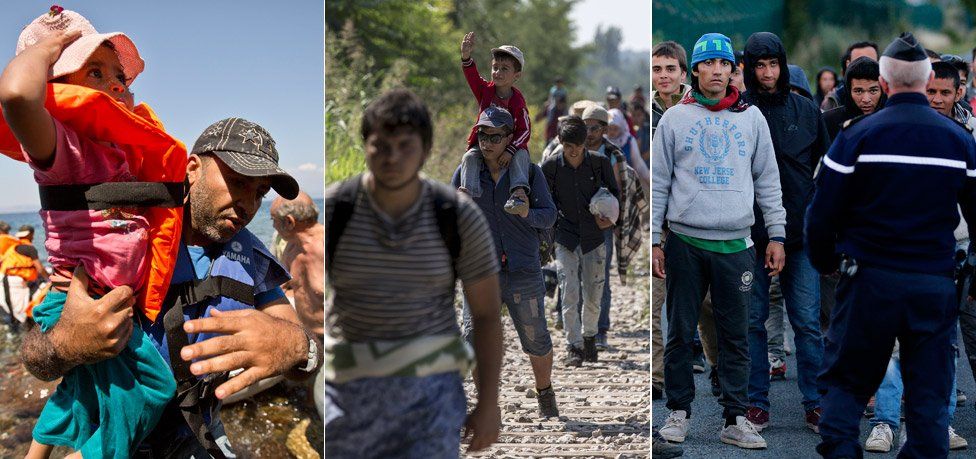
More than a million migrants and refugees crossed into Europe in 2015, sparking a crisis as countries struggle to cope with the influx, and creating division in the EU over how best to deal with resettling people.
The symbolic milestone was passed on 21 December, the International Organisation for Migration (IOM) said, with the total for land and sea reaching more than 1,006,000.
The figure covers entries via six European Union nations - Greece, Bulgaria, Italy, Spain, Malta and Cyprus.
The vast majority arrived by sea but about 34,000 made their way over land via Turkey.

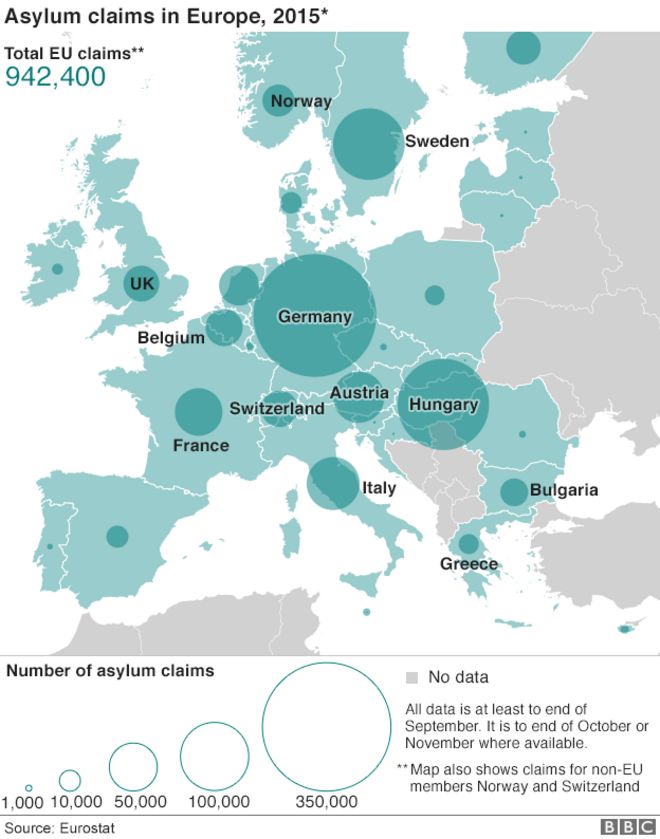
Although not all of those arriving claim asylum, more than 942,400 people have done so in the EU, according to monthly figures from the EU statistics agency, Eurostat.
Germany has received the highest number of new asylum applications, with more than 315,000 by the end of October.
But far more people have arrived in the country - German officials said more than a millionhad been counted in Germany's "EASY" system for counting and distributing people before they make asylum claims.
This includes a large number from the Balkan states who are not counted in the sea arrivals.
Hungary has moved into second place for asylum applications, as more migrants have tried to make the journey overland through Greece and the Western Balkans. It had 174,055applications by the end of October.
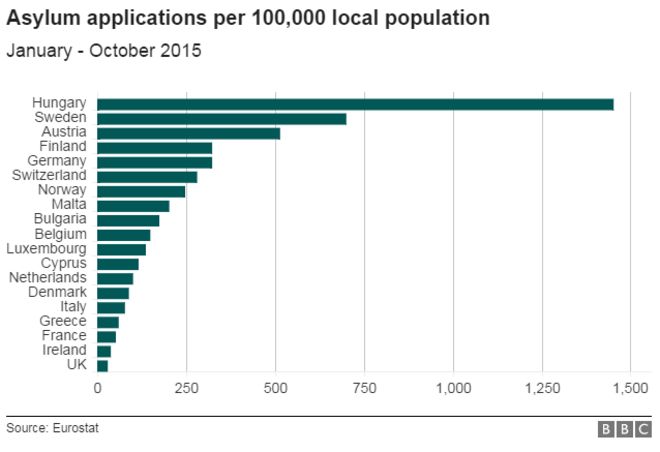
Although Germany has had the most asylum applications in 2015, the surge of people arriving in Hungary meant it had the highest in proportion to its population.
More than 1,450 refugees per 100,000 of Hungary's local population claimed asylum in the first half of 2015. The figure for Germany was 323 and for the UK it was 30 applications for every 100,000 residents.
Where do the migrants come from?
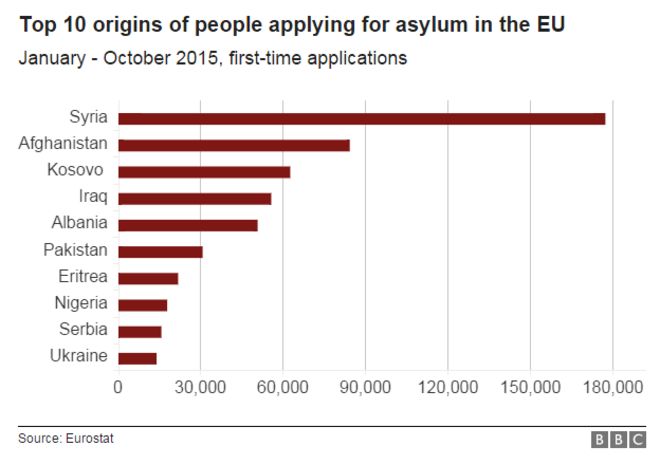
The conflict in Syria continues to be by far the biggest driver of the migration. But the ongoing violence in Afghanistan, abuses in Eritrea, as well as poverty in Kosovo are also leading people to look for new lives elsewhere.
Resettlement plan
Tensions in the EU have been rising because of the disproportionate burden faced by some countries, particularly Greece, Italy and Hungary where migrants have been arriving by boat and overland.
In September, EU ministers voted by a majority to relocate 120,000 refugees EU-wide, but for now the plan will only apply to 66,000 who are in Italy and Greece.
The other 54,000 were to be moved from Hungary, but now this number will be held "in reserve", until the governments decide where they should go.
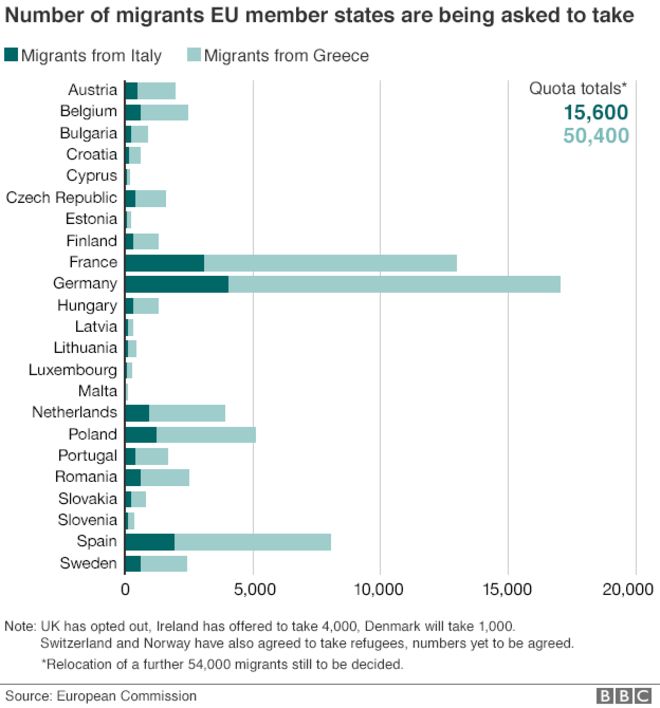
The UK has opted out of any plans for a quota system but, according to Home Office figures, 1,000 Syrian refugees have been resettled under the Vulnerable Persons Relocation scheme. Prime Minister David Cameron has said the UK will accept up to 20,000 refugees from Syria over the next five years.
Granting asylum
Although huge numbers have been applying for asylum, the number of people being given asylum is far lower.
In 2014, EU countries offered asylum to 184,665 refugees. In the same year, more than 570,000 migrants applied for asylum - although applying for asylum can be a lengthy procedure so many of those given refugee status may have applied in previous years.
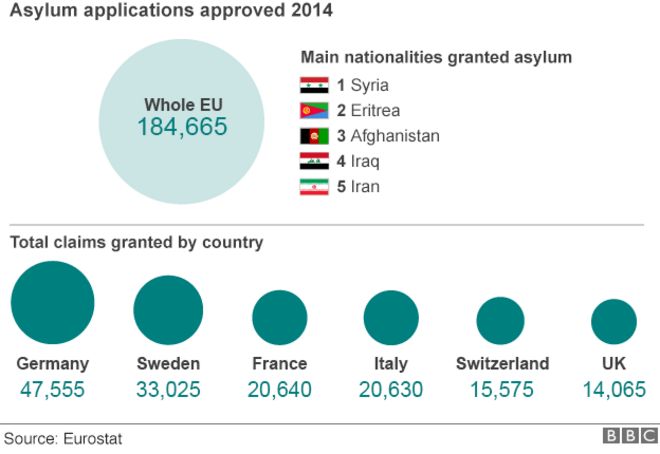
In the year to the end of September, the UK has granted asylum or another form or protection to 1,868 Syrians.
How do migrants get to Europe?
The International Organization for Migration (IOM) estimates that more than 920,000 migrants arrived by sea between January and November 2015, compared with 280,000 detections by land and sea for the whole of 2014. The figures do not include those who got in undetected.
The EU's external border force, Frontex, monitors the different routes migrants use and numbers arriving at Europe's borders and put the figure crossing into Europe this year at more than 1,500,000.
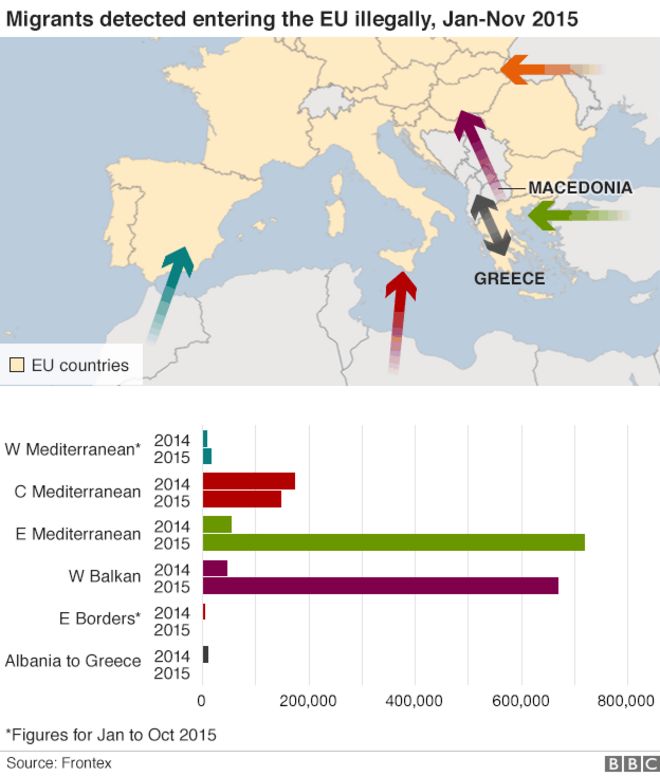
Most of those heading for Greece take the relatively short voyage from Turkey to the islands of Kos, Chios, Lesvos and Samos - often in flimsy rubber dinghies or small wooden boats.
How many migrants die?
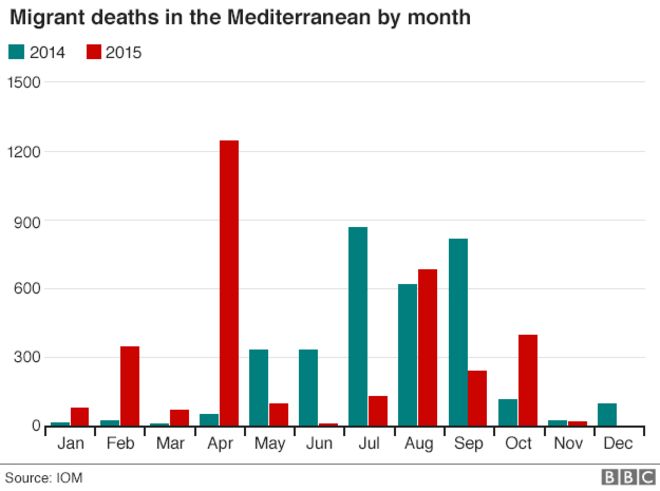
The voyage from Libya to Italy is longer and more hazardous. According to the IOM, more than 3,695 migrants are reported to have died trying to make the crossing this year - most of those died on the crossing from north Africa, more than 700 died in the Aegean crossing from Greece to Turkey.
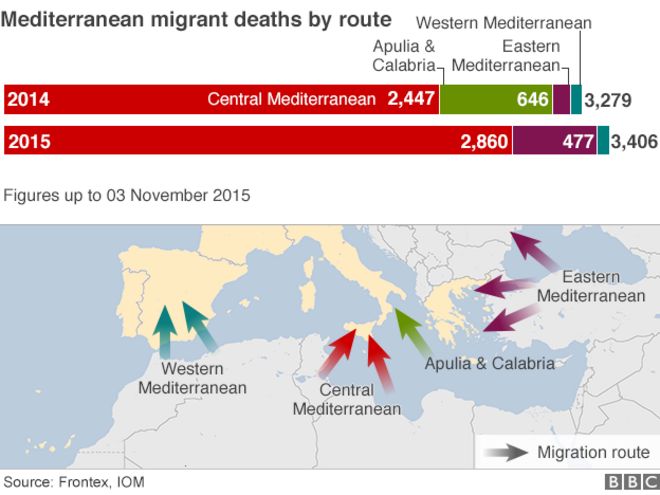
The summer months are usually when most fatalities occur as it is the busiest time for migrants attempting to reach Europe.
But so far this year the deadliest month for migrants was April, which saw a boat carrying about 800 migrants capsize in the sea off Libya. Overcrowding is thought to have been one of the reasons for the disaster.
Impact of the Syrian crisis
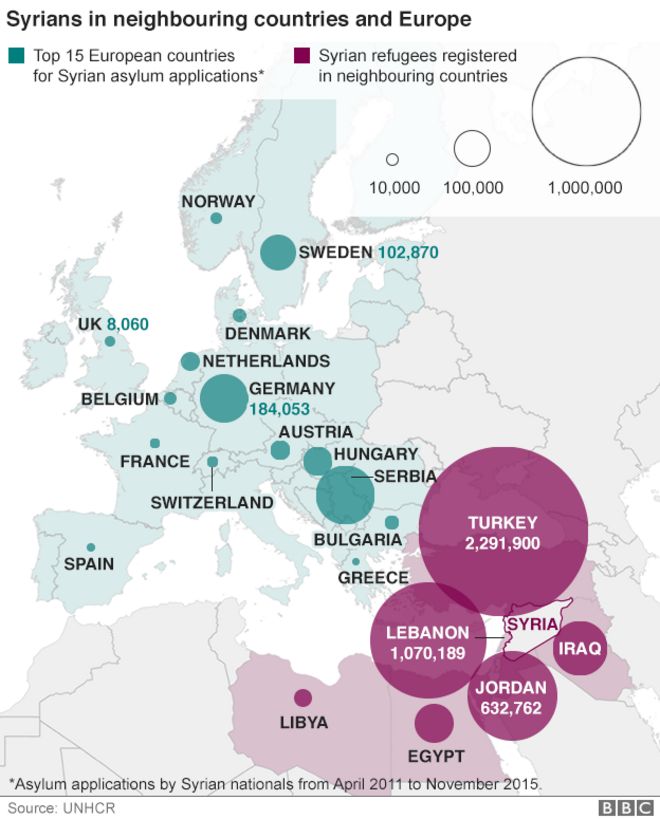
Asylum applications from Syrians in Europe have surged in 2015, fuelled by the country's vicious civil war which began more than four years ago and shows no sign of ending.
The vast majority of refugees have fled to neighbouring countries such as Turkey, Lebanon and Jordan, and the number of Syrians there far outweighs those who have made the difficult journey to Europe.
Migrants redistributed within Germany
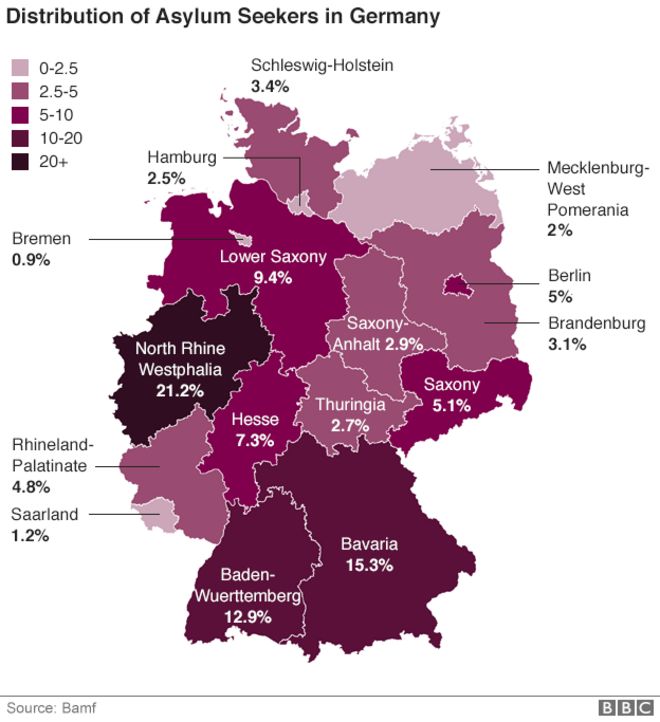
Germany is currently the preferred destination for tens of thousands of migrants in central Europe. It is expected to receive up to 800,000 asylum-seekers this year, four times the figure for 2014.
Germany has a quota system which redistributes asylum seekers around its federal states based on their tax income and existing population density.
A note on terminology: The BBC uses the term migrant to refer to all people on the move who have yet to complete the legal process of claiming asylum. This group includes people fleeing war-torn countries such as Syria, who are likely to be granted refugee status, as well as people who are seeking jobs and better lives, who governments are likely to rule are economic migrants.
- This migrant crisis is different from all others
- Merkel's demise greatly exaggerated
- Will Germans embrace or shun refugees?
- In depth report
- Migrant crisis: Athens shelter for some, despair for others
- Migrant stories: The pull of Europe
- Sweden far-right party makes gains from migrant crisis
- The tattoos Eritreans get before they leave for Europe
- Europe's rifts laid bare in Brussels
No comments:
Post a Comment